
Building subtitles and captions into your videos can make a large impact on viewership and also make your content more accessible.
Our company was built by filmmakers. We know the power of sound in video production. Have you ever tried watching a terrifying film with the sound down? It is no longer scary. What would Star Wars be like without John William’s music score? However, there are many important reasons to include subtitles and captions for many different types of viewers and viewing experiences. After all, we’re talking about getting your message out to as many people as possible and by simply adding captions and/or subtitles, you could reach thousands more.
Did you know that research from the UK found that 80% of people who use closed captions are not hard of hearing? Captions solve all kinds of problems including poor audio quality, low volume, noisy environments, and social media default settings. Furthermore, time-stamped captions allow for search engines to index video content, boosting video SEO.
But first, let’s define Captions and Subtitles, because there is a difference.
Captions:
-
Captions are timed text shown on screen (ie: on TV, YouTube, Vimeo, etc) used to communicate spoken content and sound effects as the video plays.
-
Can be open or closed. Closed captions are separately uploaded files and can be turned on and off. Open captions are edited into the video and are baked in. They can’t be turned off. Closed captions can be turned off and are searchable.
Subtitles:
-
Subtitles are translations for people who don’t speak the language of the medium. These accompany foreign films for example.
-
Standard subtitles assume the viewer hears the audio.
You should use them both when possible! If you are spending the time, effort, and money it takes to create videos, you want to make sure you are getting the highest return on your investment possible.
1. Not everyone can hear your audio!
Don’t exclude people. Closed captioning was actually developed to aid individuals with hearing impairments. The Americans with Disabilities Act, Section 504 and 508 of the Rehabilitation Act, the FCC’s CVAA, and the international Web Content

Accessibility Guidelines (WCAG 2.0) all require captions for multimedia. These laws and guidelines help prevent discrimination against people with disabilities or the hearing impaired.
It’s not only good for the world to be inclusive, it’s good for your business, too. More than 28 million Americans are deaf or hard of hearing. That’s a lot of people who might like to watch your content and can’t. And internet videos are global, so the deaf community around the world 10x greater. It’s said that 5% of the world is hearing impaired in some way. Any brand that takes accessibility seriously must take captions seriously.
2. Captions Improve Video SEO
Caption files or .SRT files that are added to videos (as opposed to auto-generated or open captions) are indexed by Google. Not to mention there are all these other benefits that we mention in this blog like increased engagement time that have a positive effect on social shares and call-to-action clicks that obviously boosts SEO as well. So if you want it to be easier for online searches to find your videos, captions are the way to go.
3. Subtitles Are Important For International Engagement
“Videos without borders” isn’t just a clever phrase; it’s a smart business strategy that opens doors to a global audience. Subtitles play a crucial role here. Instead of recording multiple audio tracks in different languages, which can be costly and time-consuming, adding subtitles is a quicker and more cost-effective way to reach people worldwide.
Why is this important? Well, consider this: Chinese speakers make up nearly 20% of the world’s population, followed by Spanish at 8.1% and Arabic at 4.9%. By using subtitles, you can tap into these diverse markets without hassle.
But it’s not just about numbers. Subtitles also make your content more inclusive and accessible to people with different language backgrounds and hearing abilities. Plus, they can enhance the viewing experience by clarifying dialogue and adding visual interest.
So, “Videos without borders” isn’t just a catchy slogan; it’s a practical approach to reaching a wider audience and making your content speak to everyone, regardless of language.
4. Captions Improve Comprehension
A great way to learn faster on your favorite YouTube channel is to watch with the captions on.
It’s like taking notes from the lecture. Ply Media found that engagement increased by almost 30% any school teacher will tell you that engagement is the key to comprehension.
In fact, a lot of people choose to watch videos with the sound off for a number of reasons. For years it has been widely reported that up to 85% of videos on Facebook are watched with the sound off. I don’t know whether people are confused or it’s just more preferable or that is the default setting, but that’s a big number. Wanna hear something really crazy. 2/3 of videos on Snapchat are watched with no audio.
A study by Verizon showed that 50% of respondents usually watch video without sound – rising to 69% when watching in public places – and that 80% were more likely to watch an entire video when captions were available.
5. Increase Your Social Reach
Check out these crazy stats. Subtitled videos increase shares by 15%, have 17% better reactions, and 26% more call-to-action clickthroughs. Instapage found that captioned videos on Facebook had 16% higher reach than those without. This one tip alone should convince you to start using subtitles.
Let us know if you’re interested.
The next time you hire Early Light Media to produce your videos, let us know that you’re interested in making them accessible. The time it takes depends on the length of the video and whether you need open or closed captions or international subtitles. However, in general, it’s usually fairly straightforward and not very expensive. There are also services all over the web that will do it for you for a reasonable price,,

About the Author
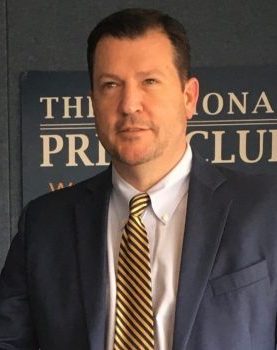
Darren Durlach | Director & EP
Darren Durlach is an Emmy Award-winning filmmaker, commercial director, and screen writer based in Baltimore, MD. He’s directed for networks like NBC, Discovery, and Nat Geo as well as clients like Microsoft, Audi, Payactiv, Hollister, Callaway and more. The work he’s best known for gravitates towards deeply personal stories couched in a bold, realist visual style. His goal is to give the audience chills. His favorite part of the process is collaboration and discovery.
He loves the ‘a-ha’ moments that spontaneously combust during script analysis or tech scouts or on set when everyone is bringing ideas and the energy is frothy. EVERY part of the process is fun, and grueling, and contributes to the film.