
As we reflect on our first decade as a company, we’ve been thinking about what we do, how we do what we do and why we excel at it… And what arose to the surface with force, was an idea that we need to tell our own story. Not only to reflect on the decade for our own enjoyment and open the time capsule of memories we’ve collected over the years but also to educate about where our powers were forged and to prove that when we ask you to be vulnerable and share your story that we’re willing to do the same. This is how we did it.
The process for producing a film about us isn’t much different than what we do for our work with brands, nonprofits, and television. By answering a series of questions and then simply following the plan that has worked time and time again for nearly every project we touch. We picked away at this project as a team for about 5 months from start to finish. Feel free to use this process as a guide for telling your own story, an epic waiting to be uncovered!
Step One: Who is our audience and what do we want to achieve?
Internal: Empower and inspire our own team and the many partners we collaborate with by condensing 10 years of storytelling into the most palpable moments. Not only did we want to show and prove to them how much we have and can accomplish together, enjoy those accomplishments, and inspire us all for the next 10 years; but we wanted to make sure that every person on our team, no matter how long they have been with the company, has put their fingerprint on this in some way. That was imperative for this to reach its highest potential and for everyone to feel a part of this experience.
External: Educate our clients about who they are working with and why we are exceptional storytellers. ‘Storytelling’ for us is not just a buzzword. It’s real. Hard won skills deeply embedded in our process, based on the art & science of storytelling, are of great value in winning the attention of your audience. Attention is a currency more valuable than gold. We are forever students of the craft no matter how long we have practiced.
Step Two: What’s the format?
Deciding: This took a bit of debate and back and forth until we finally settled on what we have today. What is the length? Do we use narration? Do we do a series of on-camera interviews with our team? Do we conceptualize an execution that is a more elaborate and stylized like we would for fictional commercial? We ultimately settled on what felt most natural for us, what we have excelled at for years, and what also worked with the ever-present constraints of time and budget (of which there was none of either).
Narration: The use of narration can be extremely effective in storytelling. You only have to look at The Shawshank Redemption, Fight Club and Deadpool to know that voice over or narration when used as a narrative device can add depth, context, and ground the viewer through complexity. The key in documentary is that the narration play a supporting role, always setting up the people and moments from the story to allow them to shine as the star! But also from a practical perspective it allows us to produce the story faster and make changes during revisions easier. While interviewing our team members was alluring and an extremely effective method of storytelling in documentary, it wasn’t as fast as writing a script. And remember, we had a LOT of archived projects to review. It also would’ve made US the star putting too much emphasis on our team as the hero, when we always play a supporting role in the stories we tell.
Length: Length is always difficult to prescribe or predict when it comes to a short film. In many ways, it’s nice to have a boundary on length because it limits the many limitless options. As creatives, many think we want more options. But just as kids feel more creative freedom with guidelines and rules counterintuitively, so do we. So the first edit was between 2-3 minutes, a common length that clients ask us for all the time. However, we didn’t want to limit ourselves and we have found that the most powerful short films we have produced that have garnered the most attention fall between 8 and 10 minutes. If executed well, it is the perfect amount of time to allow for a full journey through the story. 2-3 minutes would’ve left too many moments and twists and turns on the cutting room floor. We knew we had the goods and it needed room to breathe.
The Invocation of the Muse: We would be remiss if we didn’t say that you must allow for inspiration to come into process of choosing a format. It’s not all decided by practical limitations, of course. Devine inspiration can inform the format. In this case, we had a ton of brainstorming ideas and concepts that the entire team contributed. In the end, this direction called us.
Existing Material: In choosing the format, of course, you need to asses what you have to work with that already exists. The archive, in this case, is really the entire point of this exercise. The existing material is the protagonist in this story, the hero that we’re trying to let shine! So the question became “how do we identify and narrow down our vast collection of moments into the ones that need to shine and tell our story?” This leads us into the third step of refining the story and how we overcame our biggest challenge: having way too much material!
Step Three: Organizing the story
Identifying key moments: We brainstormed as a large group the various defining moments of our company and put them on a linear timeline. This allowed us to study the natural progression of ELM’s evolution. We listed out our critical transitions, defining achievements, challenging moments, etc….
Identifying key projects: We continued brainstorming and passing a long a spreadsheet of a master list of projects that support our journey and we identified the most poignant characters, imagery, and moments from each project.
Building an outline: We looked at those moments through the lens of The Hero’s Journey made famous by the great works of Joseph Campbell which breaks down the mechanics of story by studying ancient greek mythology.
Act 1
Define Your “Ordinary World”
-
- Introduce the company: Where did the idea begin? Who were the founders? Set the scene before the journey.
- Showcase early works: Include snippets of early projects, capturing the initial spark and struggles.
- Establish the “call to adventure”: What was the defining moment that pushed the company towards growth?
Act 2
Entering the Unknown
-
- Highlight key challenges: Show pivotal moments of overcoming obstacles, like expanding services, adapting to technology, or navigating difficult clients.
- Feature pivotal team members: Introduce key talent who contributed to the company’s evolution, showcasing their passion and expertise.
- Illustrate moments of discovery: Capture “aha!” moments, innovations, and creative breakthroughs that shaped the company’s identity.
Facing Trials & Transformations:
-
- Showcase diverse projects: Blend snippets of commercials, documentaries, and films, demonstrating the company’s range and adaptability.
- Show moments of resilience: Include overcoming setbacks, pivoting strategies, and bouncing back from failures.
Act 3
Claiming the Reward & Return:
-
- Highlight awards and recognition: Showcase industry awards, positive press mentions, and community engagement to demonstrate success.
- Focus on client impact: Include stories of how their work positively impacted lives or businesses, emphasizing their purpose.
- End with a vision for the future: Tease upcoming projects, new initiatives, and the company’s continued journey.
Step Four: Writing the Script
“The first draft of anything is shit.” – Ernest Hemingway
“A writer never finishes a book, they simply abandon it.” – George Bernard Shaw
This is where it helps to have a singular writing voice to craft the first few iterations as it requires a lot of deep focus and concentration and consistency of tone. But in the end, we wanted everyone to have input. While Darren took the lead, Dave & Jody contributed to much the copy, the contours of the story structure/ syntax, and the tone. Of course, with feedback from the entire team throughout all of the 8 or 9 iterations. Narration was being tweaked and re-recorded up until the final hours of finishing the video.
Maintaining a dialogue: Think of your film as two people in a dialogue working together to tell a story to a third person (your viewer). The narrator is one person in the conversation and the video is the other person in the conversation. As in conversation, one person offers an interesting piece of information and then leaves room for the other person to respond and build on that information. Both providing new value with each new piece of information. They shouldn’t mirror each other or it will feel redundant. For example, the narration shouldn’t describe what is being seen in the images. It should instead be information that gives meaning and context to the images we’re seeing. Also, like in comedy, you need a straight man or foil to play against the comedian. This gives the comedian contrast enhancing his effect, but most importantly sets up the comedian to launch the joke. This works well in all kinds of set ups, not just funny ones.
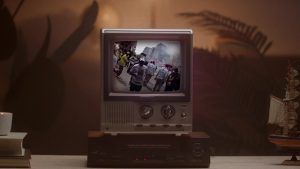
The narrator must always be the foil working to set up the moments or characters in the video to deliver the punchline. For example, One line is “…and keeping calm under pressure” but the visual is seeing an explosion. This wouldn’t be nearly as affective had the line been “and keeping calm under pressure when things like the Boston Marathon explosion occurred.” Let the bomb and chaos speak for itself.
Humor as Pressure Valve: It’s okay to display your personality in the narration as long as it doesn’t steal the show or become distracting from the star – your cause, story, moment, etc…. While documentaries are associated mostly with serious topics, it doesn’t mean that you can’t sprinkle in one of the best tools ever gifted to us by god: our sense of humor. It’s releases tension. It lowers the viewer’s guard. It takes the viewer by surprise, making your story all the more alluring and relatable.  For example, when the narration is “capturing the truth of the littlest unplanned moments” and it’s punctuated by Sara Waire’s young son farting as she’s trying to help in a Yoga pose. By the time we arrive here, we’re tense, we’re stressed and we’re ready for the release…. of noxious gases.
Time & Money: A great writer once said “Each word costs you a dollar and save as much money as you can.” Shakespeare had a similar quote “Brevity is the soul of wit.” Your viewer is a keenly aware of the value of their attention of which 10,000 other things are beckoning them at this very moment. Every single word should add value and authority. If the sentence is eight words but can be seven, do that. Write in an active voice with strong verbs, few adverbs and as little filler as possible. Avoid soft sentences that sound apologetic and more like opinion. The same is of course true for each soundbite and image as well. It’s just good firm storytelling.
- Weak (Passive): “After shooting the scenes, the story was carefully put together by the filmmakers.”
- Stronger (Active): “The filmmakers crafted the story, piecing together each scene.”
Step Five: Editing it all together
Editing and writing are one in the same. The script is a roadmap. But as every good adventure involves a bit of improvisation, divine intervention, and spontaneous discoveries, so does the act of editing. It’s a lot like sculpting. Once you have your raw materials, you chip away a little from this and that until a shape begins to emerge. It begins with big strokes, sloughing away large chunks, but as you work your way to revealing the finished piece, you make finer edits. This was especially the case with our 10 year video. We had so much archival material to work from and had to strike a number of balances to get the right tone.
Open & Close Strong: The goal of the open was to use the most seductive images and music to grab the viewer off the top and hook them, but not overstay the welcome before we launched into the plot. We wanted to showcase a mixture of projects from high-production value to more gritty doc work and build a little intrigue and mystery. We knew we wanted the close to feel epic and inspirational to set up what was to come just like we planned with the outline. We wanted to leave the viewer on a runner’s high through the marathon of moments. So we built in the cinematic strings that grow to a pinnacle and included some of our more heart-felt moments.
Graphics & Animated touches: A large part of our story is growing through the years and adding new in-house design and animation services that greatly enhance our ability to tell stories and make films. Kellee, Ezra, and Kat started brainstorming ways to weave in animation throughout, both in highlighting animation projects and also building new elements. Animation and graphic design are fundamental to storytelling for time in memoriam. It allows us to find new ways to help the viewer comprehend complex ideas, emphasize important moments or words, illustrates parts of a story that are less visual in dynamic ways, and overall increases the production value 10 fold.
Music & Sound Design: Good music & sound design is like the sauce on ribs. You can have smokey, dry ribs and they will still be delicious; but add the right tangy bbq sauce and they will be devoured. The trick is to know when you want to be bold with music choice and let it lead the edit and drive the images forward and when you want to use music like salt, to simply enhance the flavors that already exist. Sound design is especially like salt. You don’t want to overpower but enhance. We did the offline edit and music in-house but sent it off later to our favorite post-sound artist Nick Sjostrom at Cerebral Lounge who did an exquisite job adding little flourishes. The heavy breaths under the shadow boxers at the beginning were added later by Nick along with the gun cocking sounds and a few other perfect little touches that added life. However, this was not like any normal project on the music score. Our need to go through the deep archives to find projects didn’t always work in terms of finding the raw material. So we had to resort to MP4 files which are flattened and didn’t give us the ability to independently take elements from old projects and edit them separately. This means that if we wanted to show a moment from a story and hear what they’re saying, we also had to use the music that was underneath; a delicate balance that can sound inharmonious if we want to show a great moment with a string of others but only one music bed. If you listen carefully, you’ll hear the music change a lot at parts. There were a couple of times in which we used the song from an original project very effectively letting the song play underneath if there wasn’t anyone else talking and then showing images from other projects. For example, the band playing at the Grand Canyon for the film Confluence played music throughout the film with no one speaking over it, so we let that song be the bed for that section to a very satisfying effect when you can see occasionally the rhythm of the band matching with the song that’s playing. Another time was our commercial with DDM and Goodwill when he was rapping. We utilized the natural song for the spot to build momentum with other imagery and when we showed the dancers it provided a pleasing sync.
Building to Moments: The importance of moments in documentary storytelling can’t be understated. It’s literal gold, keeping your audience in rapt attention. And the spell has a lasting effect giving you extra juice to keep the viewer hanging on to the next chapter, surprise or moment. We were constantly finding new big moments until the very end of the edit, playing, experimenting and moving them around to ensure maximum effect, rewriting (in many, many cases) the narration to opimize the impact of the moment. For example, when the tire blows up. “Our lenses of seen some things.” We could’ve included this moment anywhere in the film without explanation. But it deserved its own little setup, not too much, but just enough to peak the senses of the viewer and build their anticipation. Moments remind the viewer that your story is genuine. It’s an antidote to any potential resentment they might be feeling from that most awful feeling one gets a viewer when you feel like the director is trying to force you to feel something. Moments break any chance of the veneer starting to materialize.
So Proud of Our Team
Everyone contributed to the writing, the editing, the conceptualizing, and the iterating. We discussed various styles, lengths, and tones. What are the ‘main events’ or ‘plot points’ over the last 10 years? What are the defining moments that we have captured? How specific should we be? How vulnerable should our team be? At one point, we discussed doing it interview-based and really gettin’ in there with details about the joys and the challenging growing pains that companies inevitably experience. After about 5 months of toiling (happily) between client projects, this is the video we produced which really captures the spirit of ELM. Ready for the next one? January 1 we start collecting for 2033. Are you ready to Capture the A.I…err… Human Experience?? Let’s go!
If you haven’t already reached out about your next video project, get in touch. We’re looking forward to chatting more.

About the Author
Darren Durlach | Director & EP
Darren Durlach is an Emmy Award-winning filmmaker, commercial director, and screen writer based in Baltimore, MD. He’s directed for networks like NBC, Discovery, and Nat Geo as well as clients like Microsoft, Audi, Payactiv, Hollister, Callaway and more. The work he’s best known for gravitates towards deeply personal stories couched in a bold, realist visual style. His goal is to give the audience chills. His favorite part of the process is collaboration and discovery.
He loves the ‘a-ha’ moments that spontaneously combust during script analysis or tech scouts or on set when everyone is bringing ideas and the energy is frothy. EVERY part of the process is fun, and grueling, and contributes to the film.