
You’re not just making a film. You’re shaping how someone will be remembered.
And in documentary filmmaking, that’s a weighty responsibility—especially when the pressure’s on. Maybe you’re chasing a Vimeo Staff Pick, a Netflix deal, a festival slot, or just trying to avoid losing money. That kind of pressure tempts even the most well-meaning creators to exaggerate, take things out of context, or bend the truth.
But there’s one question that always brings me back to center:
“If my subject were sitting next to me in a theater, would they feel seen—or blindsided?”
I learned this lesson firsthand, and nearly the hard way. More on that later.
Docs ≠ Journalism (And That’s OK)
Journalists follow a rulebook. They have editors, legal teams, and shared ethical standards. Viewers understand the boundaries—and expect consequences when they’re violated.
Documentary filmmakers operate with far more creative freedom. As Werner Herzog famously says, we often seek emotional truth, not just literal fact. And while that freedom can lead to powerful storytelling, it can just as easily turn into manipulation.
Anthony Bourdain got this right. In a politically divided West Virginia mining town, he showed up to listen—not to judge. Though his views clashed with many locals, he earned respect across political lines by telling their story with integrity.
Now imagine another filmmaker visiting the same town but editing the interviews to make locals look ignorant. That might serve a narrative—but it fails the test:
Would they feel seen, or blindsided?
Essential Truth vs. Literal Truth
Writer Rachel Kamerman gives a great example:
“Bob went to 7-Eleven at midnight for a six-pack” is literal truth.
But the essential truth? Bob has been in AA for 10 years after losing his child. Every night, he battles the urge to drink. Tonight, he lost.
Our job as editors isn’t to distort reality—but to mine for emotional resonance. Done right, editing, music, and story structure reveal meaning. Done wrong, they become tools of manipulation.
Where Filmmakers Cross the Line
Here’s where things often go off the rails:
Reenactments Without Disclosure
A shot of someone walking down a hallway? Maybe fine.
But restaging emotional events without telling the viewer? That’s deception. The “Law of Milli Vanilli” applies here: don’t fake it.
Overuse of Music
Music is powerful. Use it intentionally. There’s a difference between setting the tone and steering emotion. A score should enhance a moment—not dictate how it’s supposed to feel.
Context-Stripping Edits
Every edit shapes reality. But if your cuts change meaning or alter a subject’s intent, you’re rewriting the truth. Ask yourself:
Why does this shot matter? Does it deepen the story or just look good?
Consent Isn’t a Checkbox
A signed release form isn’t enough. Share rough cuts. Have tough conversations. Consent is an ongoing process. And if someone on your team says, “That’s not really what happened,” pay attention.
Above all, check your ego. You hold the mic. That power can harm people if you’re not careful—and you might not realize it until your subject is sitting beside you at a screening.
Intention Over Perfection
Even vérité legend Jean Rouch described documentary as “a cinema of lies” in pursuit of deeper truth.
Joshua Oppenheimer staged surreal reenactments in The Act of Killing not to deceive—but to expose internal realities that couldn’t be reached by simply rolling the camera.
So the issue isn’t whether we shape the story—it’s why we do it.
Are you deepening understanding? Or distorting reality to make your film more dramatic?
If something feels off during the edit, it probably is. Trust your gut.
The Question That Saved Me
I once co-directed a short doc called Throw with David Larson. We sent the final cut to our subject, Coffin, but never got a response. We assumed that meant everything was fine.
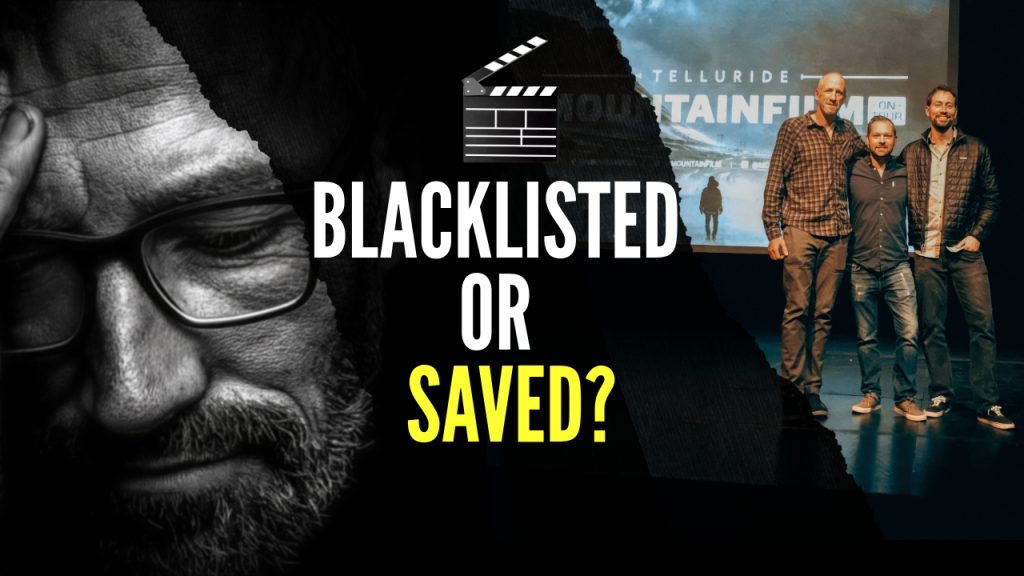
Then we all flew to Telluride Mountainfilm together. Moments before the screening, I asked Coffin what he thought of the edit.
“I haven’t seen it yet,” he said.
Cue panic.
But the lights dimmed, the film played, and when it ended, he got a standing ovation. Then he wowed the crowd with a live yo-yo performance and ended up as the unofficial star of the festival. He even snapped a photo with Jesse from Breaking Bad.
I was beyond relieved—not because we got applause, but because Coffin felt seen. And the audience saw the truth of who he was, not just a character shaped for effect.
Final Thought
If any of this made you uneasy, that’s good. It means you care.
You’re asking the right questions—and you’re already doing the work.
Make the film you’d be proud to watch—with your subject sitting right beside you.
Check out our video below: If you want to go in-depth, click on youtube below about this very topic and subscribe to our channel for more weekly filmmaking wisdom.