

Ironmark came to us with a fun challenge: they were preparing to launch Ignition, a new AI-powered marketing platform designed to connect centralized brand strategy with local marketing execution.
There was just one catch, the platform was still being built.
There weren’t polished product screens or an established visual system for us to animate. We had Ironmark’s brand guidelines, an understanding of what Ignition was going to do, and a lot of information that needed to become a clear story. On top of that, the 90-second launch animation needed to work without voiceover. It was being created in part for an event environment, where viewers might encounter it without sound.
So before we thought about animation, we needed to figure out exactly what the story needed to say.
Starting With a Framework
One of our favorite parts of the project actually happened before we designed a single frame. Instead of asking Ironmark to hand us a finished script, we created a messaging framework that would help their team unpack the product and give us the information we needed.
We kept the framework simple and organized it around three ideas: The Problem, The Solution and The Outcome. We then built questions around each one. What frustrations are customers experiencing today? What’s slowing them down? How does Ignition solve those problems? What makes it different? And what gets better for customers once they’re using it?
The goal wasn’t to make Ironmark write our script for us. It was the opposite. They knew their product better than anyone, so we created a process that made it easy for them to give us the right information. From there, our job was to find the story.
Turning Their Words Into Our Story
Their responses quickly revealed the heart of Ignition. Large brands can have a disconnect between centralized marketing strategy and what actually happens at the local level. That can mean inconsistent campaigns, too many vendors, disconnected physical and digital marketing, and limited visibility into what’s actually driving results.
Ignition was designed to connect those pieces. The platform gives local operators access to turnkey, brand-approved campaigns while giving corporate teams greater visibility into local marketing performance. Its AI also helps turn complex campaign data into straightforward, conversational insights—including through Ask Iggy, an assistant that lets users ask questions about campaign performance instead of digging through another dashboard.
There was plenty we could say. The challenge was deciding what we needed to say in 90 seconds.
We took Ironmark’s framework responses, identified the strongest ideas and organized them into a sequence of concise copy beats. Whenever possible, we kept their original language. The words Ironmark gave us at the beginning of the process became the building blocks for the final piece.
That created a clear path from framework to messaging to storyboard to animation. It also meant Ironmark could see their thinking reflected in the work at every stage, which made the creative process collaborative and easy to follow.
Telling the Story Without a Voiceover
The no-voiceover requirement made that upfront messaging work even more important. The animation had to make sense on an event floor with the sound completely off, which meant we couldn’t rely on narration to fill in the gaps.
The copy and visuals had to work together to tell the entire story. Every line needed to be short enough to read quickly, and every visual needed to help communicate an idea. Rather than trying to explain every feature, we concentrated on recognizable problems and then visually demonstrated how Ignition could bring those disconnected pieces together.
That constraint ended up making the animation better. It forced us to simplify the story and gave motion a much bigger role in communicating the message.
Creating Around an Unfinished Product
Normally, a technology launch animation might begin with a library of finished UI screens and product demos. With Ignition still in development, those assets didn’t exist yet.
Instead of treating that as a limitation, we saw it as an opportunity. Working from Ironmark’s existing brand guidelines, we developed a visual language around what the platform does, rather than simply showing what the interface looks like.
That gave us room to visualize disconnected marketing, multiple channels, local campaigns and performance data in more conceptual ways. Through animation, those pieces could appear fragmented and complicated, then organize, connect and simplify as Ignition entered the story.
It allowed us to communicate the value of the product without pretending we were showing a finished platform that didn’t exist yet.
Having Some Fun With the Creative
This was also a project where our creative team got to have some fun.
We pushed Ironmark’s brand into a visual world that felt bright, energetic, colorful and fast-moving. Bold typography, vibrant colors, quick transitions and playful movement gave the animation momentum and helped it stand out in an event environment.
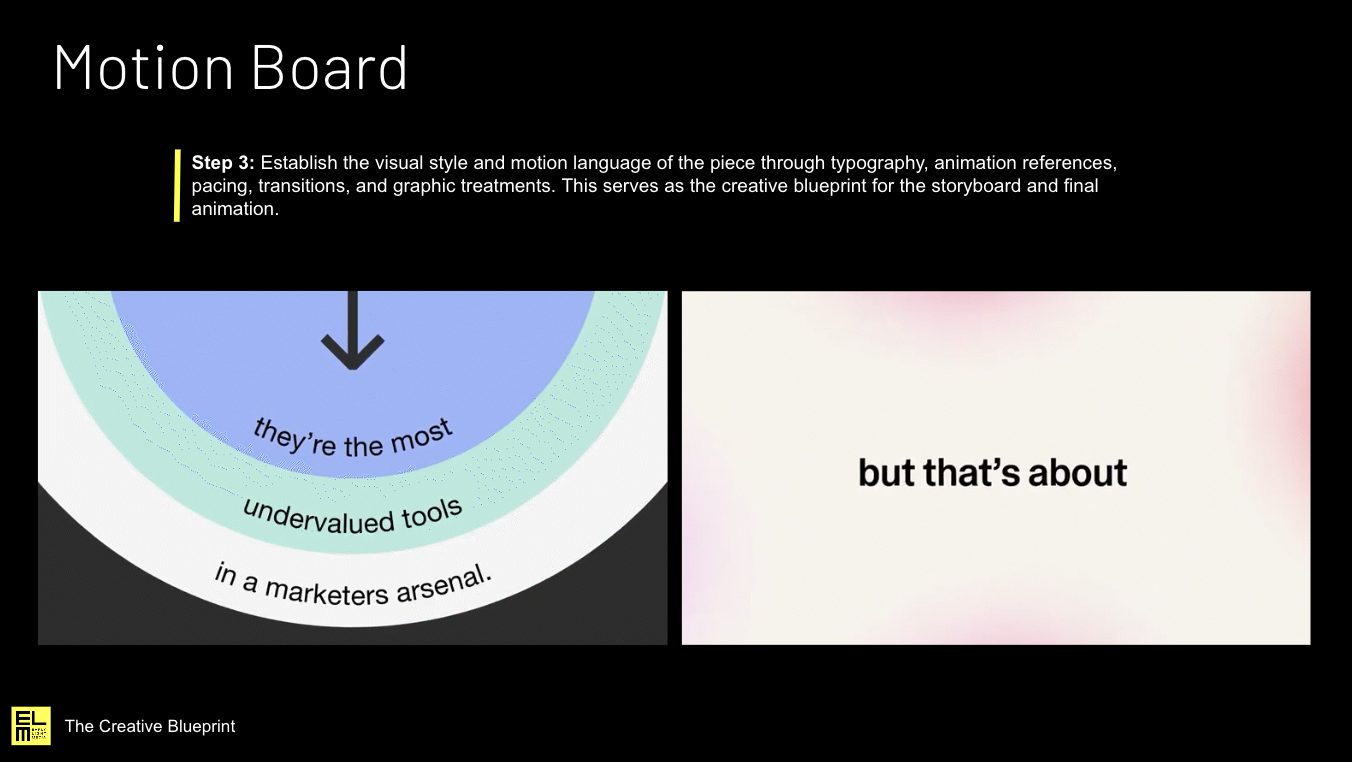
Because there was no voiceover, motion wasn’t just decoration. It became part of the storytelling. Graphics introduced problems, typography emphasized key ideas, and movement helped demonstrate how disconnected pieces could come together.
The pacing was intentionally quick, but we were careful not to let the message get lost. We wanted the animation to feel modern and energetic without becoming overwhelming.
In the end, it didn’t feel like a traditional software demo. It felt like a product launch, which was exactly what we were after.
Project Management Was Part of the Creative
We’re also proud of the project management behind the work. We handled the project from concept through launch, including scheduling, the messaging framework, copy development, creative direction, storyboarding, animation, client reviews, revisions and final delivery.
That process was especially important because the product itself was evolving while we were creating the launch materials. The framework gave both teams a common starting point and helped establish alignment early. Ironmark knew what information we needed, we understood which messages mattered most, and everyone could see how those original responses were being carried through the creative.
When we presented copy, Ironmark could see where it came from. When we moved into storyboards, they could see how those words were becoming visual. And when the animation arrived, there was a clear connection all the way back to the conversations we’d had at the beginning.
Their team responded really well to that process and they loved the finished piece.
One Story, Multiple Screens
The final deliverable was a 90-second animation designed from the beginning to work without sound. That made it ideal for Ironmark’s event launch, where someone could encounter the piece in a busy environment and still understand the core message.
The animation was also created for Ironmark’s website, and we produced shorter social cutdowns that extended the same creative concept and messaging across additional channels.
One core story could now work across the event, web and social without losing the energy or message of the original piece.
The Work Starts Before After Effects
The Ironmark project is a good example of why we don’t think animation starts when someone opens After Effects.
It starts with understanding the story.
For a new technology product especially an AI platform there can be dozens of features, benefits and technical details competing for attention. Our job was to help Ironmark identify what mattered, organize those ideas into a clear message, and then find a creative way to bring that message to life.
We started with three simple ideas: the problem, the solution and the outcome. Ironmark’s answers became our copy. The copy became our storyboard. And the storyboard became 90 seconds of bright colors, fast movement and creative storytelling.
The platform didn’t need to be finished for us to start telling its story. We just needed a process for figuring out which story was worth telling.
Do you need an experienced video agency for your next project?
Let’s talk about the right creative approach. Get in touch